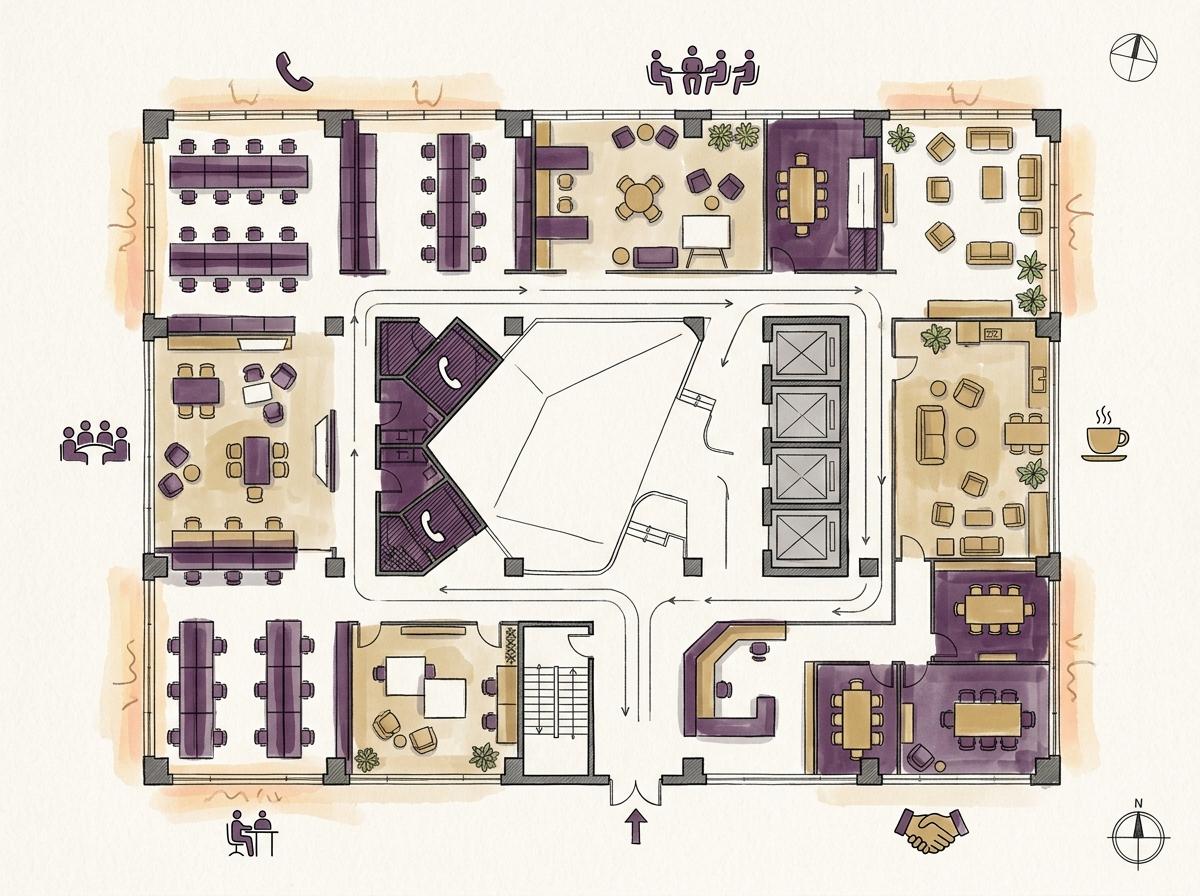
Plan for how people work.
We study focus, meetings, calls and breaks before deciding where people sit.
Start a projectOne office. Different work modes.
An office needs more than desks and meeting rooms. We observe how the team works through the agreed study period, then map the settings people choose and the workarounds they make. Team input helps distinguish layout friction from operational issues.
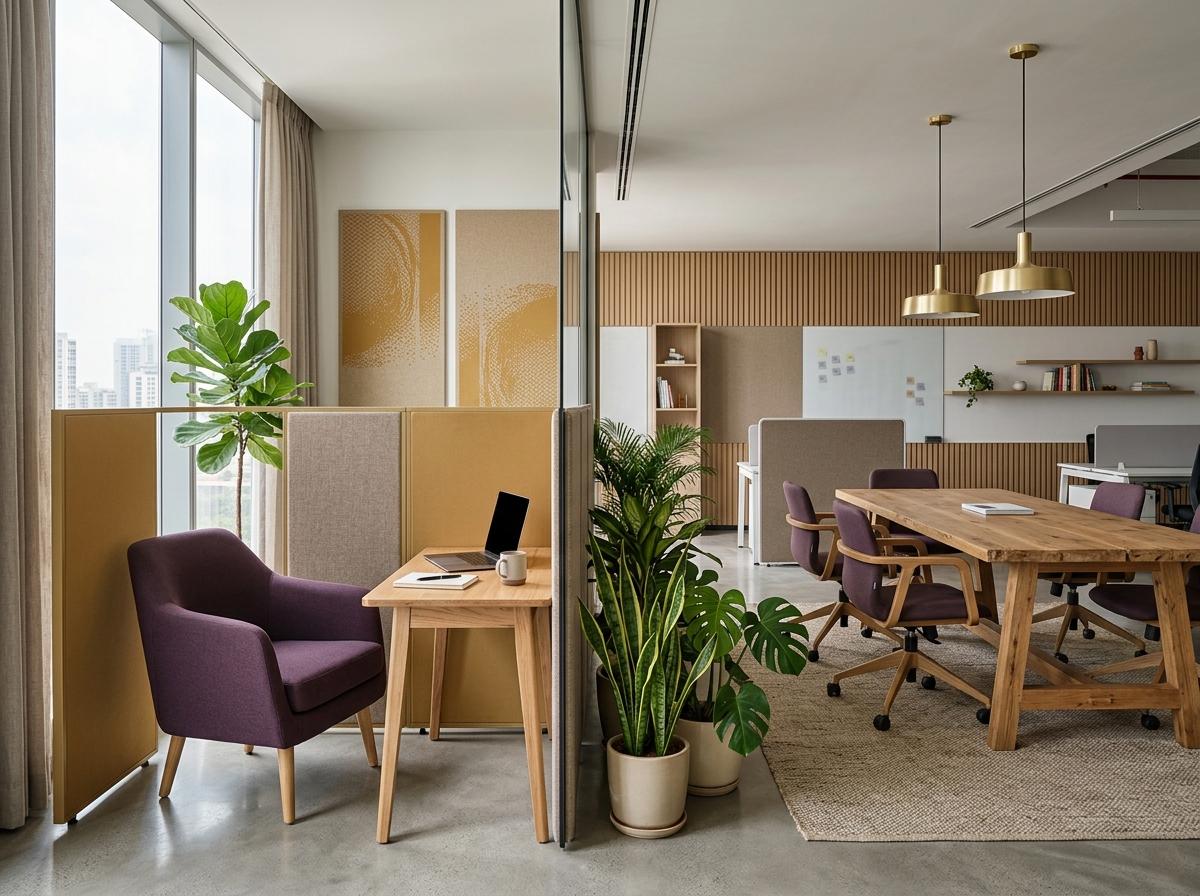
Focus
Individual work needs protection from passing conversations and exposed routes.
Collaboration
Meeting and informal settings should reflect how teams actually gather.
Calls and privacy
Confidential conversations need somewhere better than corridors or open desks.
Clients
Arrival, waiting and meeting settings should make visitors comfortable and oriented.
Follow a working day.
- 1
Observe
Record who comes in, tasks, peak activity and the ways people adapt to the current layout.
- 2
Map
Trace team routes, meetings, informal exchanges and conditions that interrupt concentration.
- 3
Zone
Balance focus, collaboration, quiet calls, recovery and client-facing space around the brief.
- 4
Design
Consider light, acoustics, air, greenery, materials and circulation around the chosen work modes.
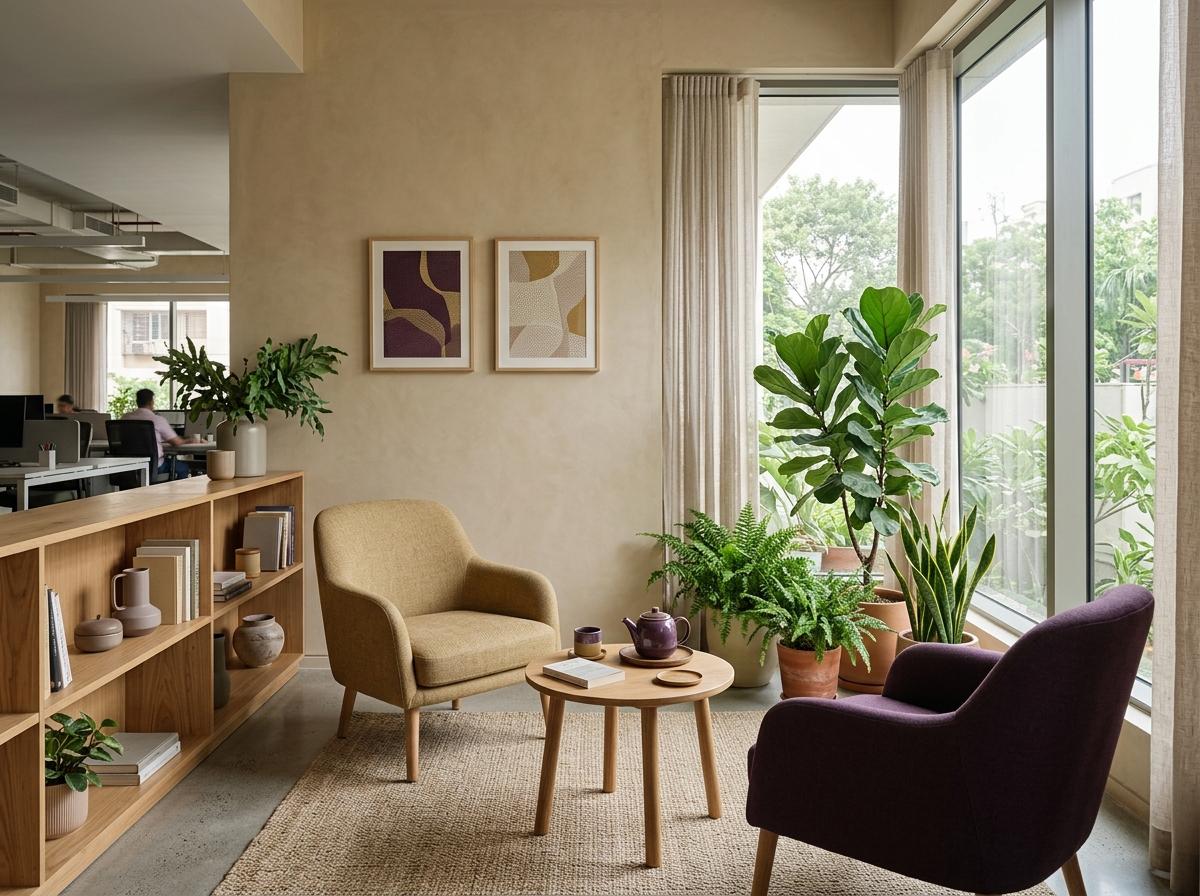
A place to pause matters.
Breaks, daylight, fresh air and comfortable settings are part of the working day, not leftover space. Better choice can support everyday work and recovery; productivity or performance improvements are not guaranteed.
Fit the workplace to the organization.
Corporate offices, startups, studios, shared workspaces, showrooms, clinics and educational settings need different balances. We scope the study around the tasks, operating model, team and building rather than prescribing one office formula.
Before we begin.
The assessment can cover focus, acoustics, privacy, collaboration, movement, posture, daylight, thermal choice, recovery, social connection, and team identity.
Yes. Observation and team input can reveal where the environment creates distraction, confusion, discomfort, or underused space.
No. Happy Spaces complements those roles with an emotional-wellbeing framework and a focused review of how the environment feels in use.
Yes. The service can help clarify which work modes the office should support and how people move between focused, collaborative, social, and restorative settings.
Tell us how your team works.
Share the work modes, current space and the difficulties you want the workplace to address.
We will discuss the brief, scope and working format before confirming an engagement.
 Made with Levo