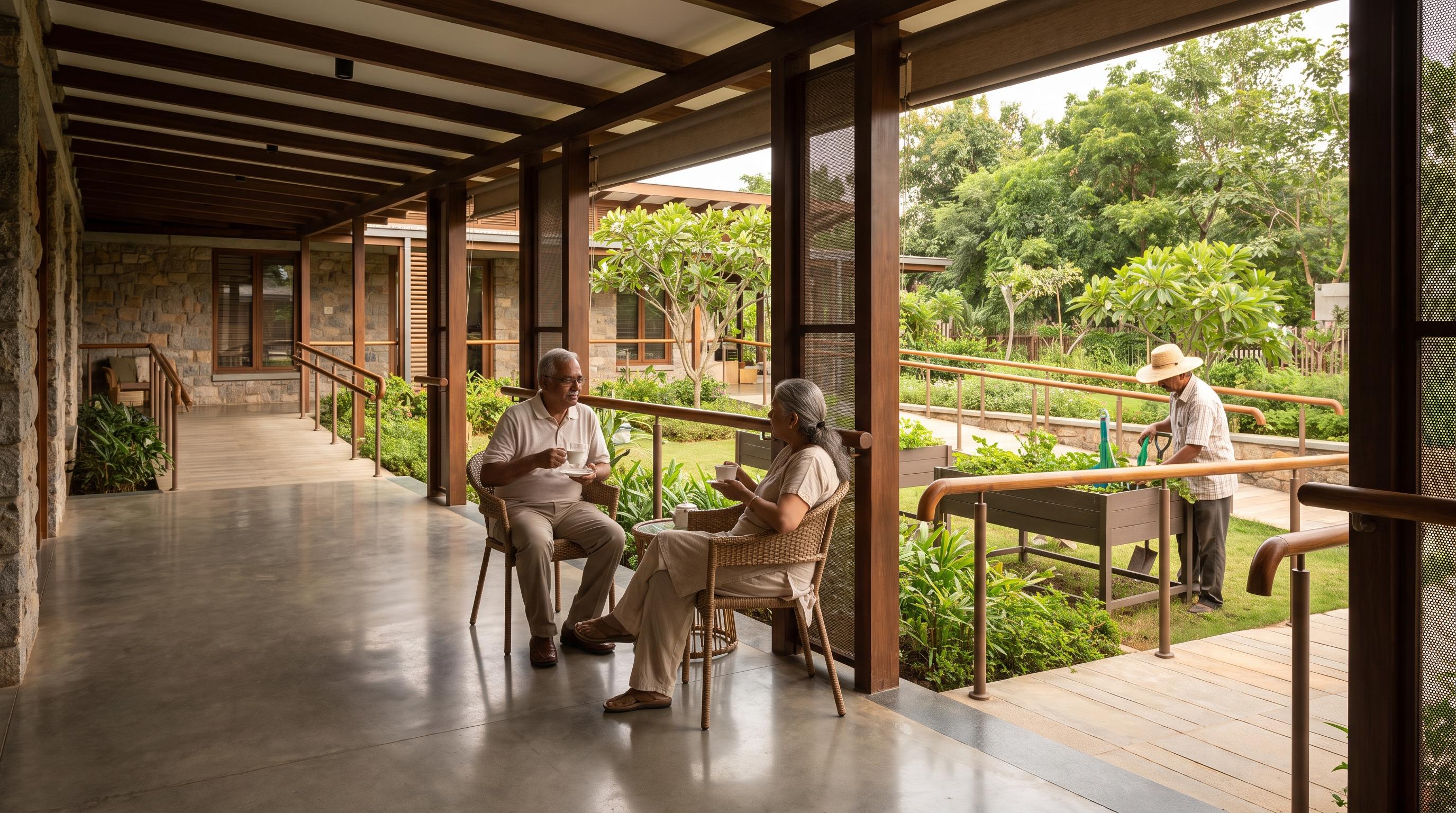
An urban courtyard expressing nature, belonging, discovery, ease, and safety

Five ways a place shapes feeling.

The Happy Space Framework helps project teams see, discuss, and improve how a place makes people feel.

The Happy Space Framework

Happiness can enter the brief.

Environmental standards often measure sustainability or physical health. We focus on how a place makes people feel and what that feeling changes.

The framework gives architects, developers, operators, and client teams a practical way to discuss emotional outcomes. It can be used in an early feasibility review, an audit of an existing place, or throughout a long design partnership.

Trees, water, shade, and daylight shaping a restorative courtyard

Nature

Nature's Pampering

Does the environment help people recover? We look at daylight, air, thermal comfort, planting, water, sound, views, textures, and the rhythm between exposure and shelter.

A view of green is useful. A sequence that lets people feel shade, breeze, seasonal change, and quiet is more powerful.

Belong

Belongingness

Can different people see a place for themselves? We examine welcome, social choice, cultural cues, shared thresholds, privacy, visibility, and the small arrangements that make connection possible without forcing it.

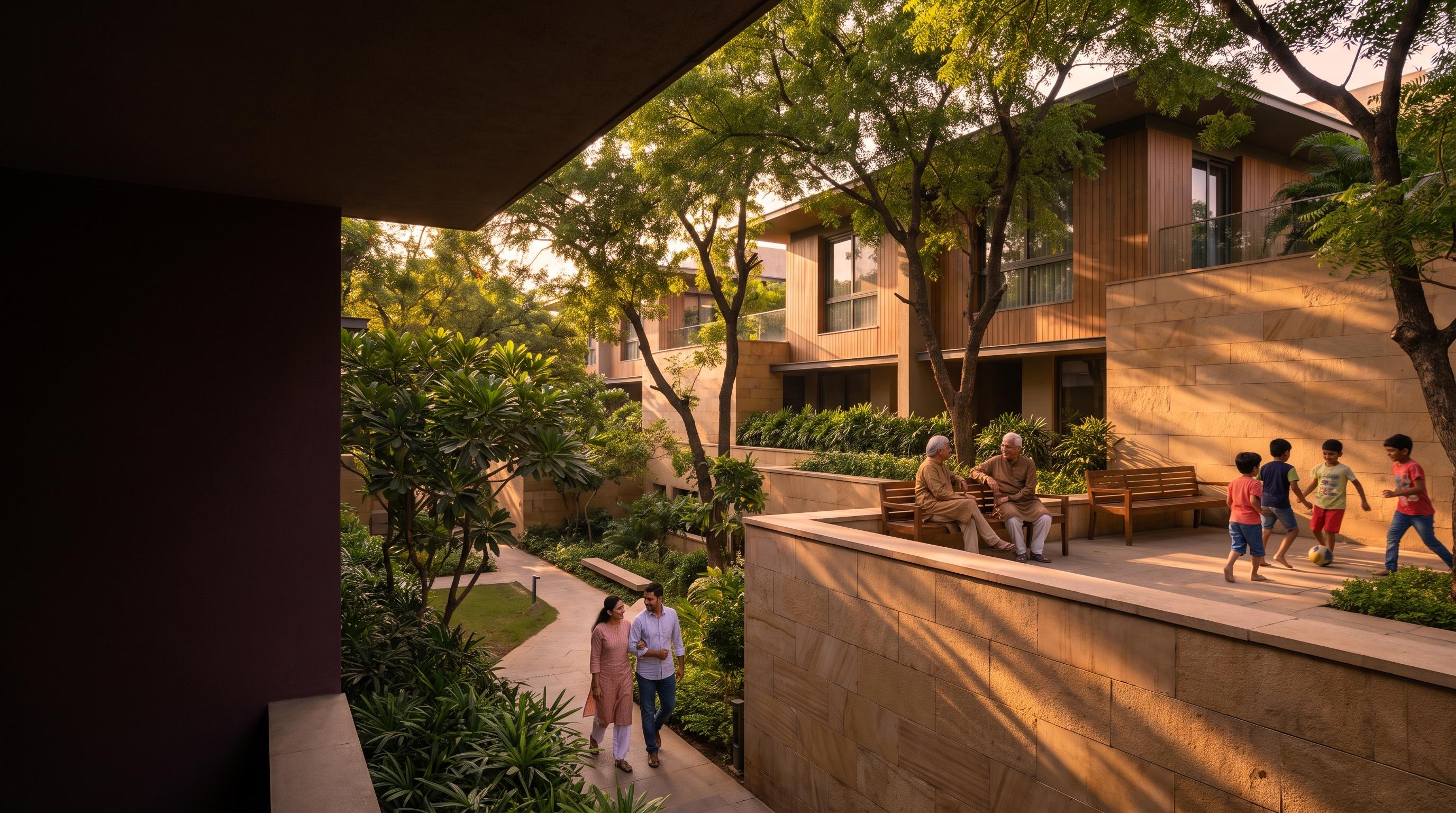
Residents of different generations sharing a landscaped courtyard

Belonging grows when people can join, observe, retreat, and return on their own terms.

Reward

Reasons to notice and return.

Reward is the pleasure of discovery, progress, recognition, and surprise. We identify where a place can create delight without depending on decoration or spectacle.

A framed view, a change in light, a social landmark, or a satisfying arrival can give memory a place to attach.

Ease

Remove the friction people feel.

Barriers include more than steps and doors. Confusing routes, sensory overload, awkward transitions, social uncertainty, poor acoustics, and missing pause points all consume attention.

The goal is not a place without complexity. It is a place whose complexity people can understand.
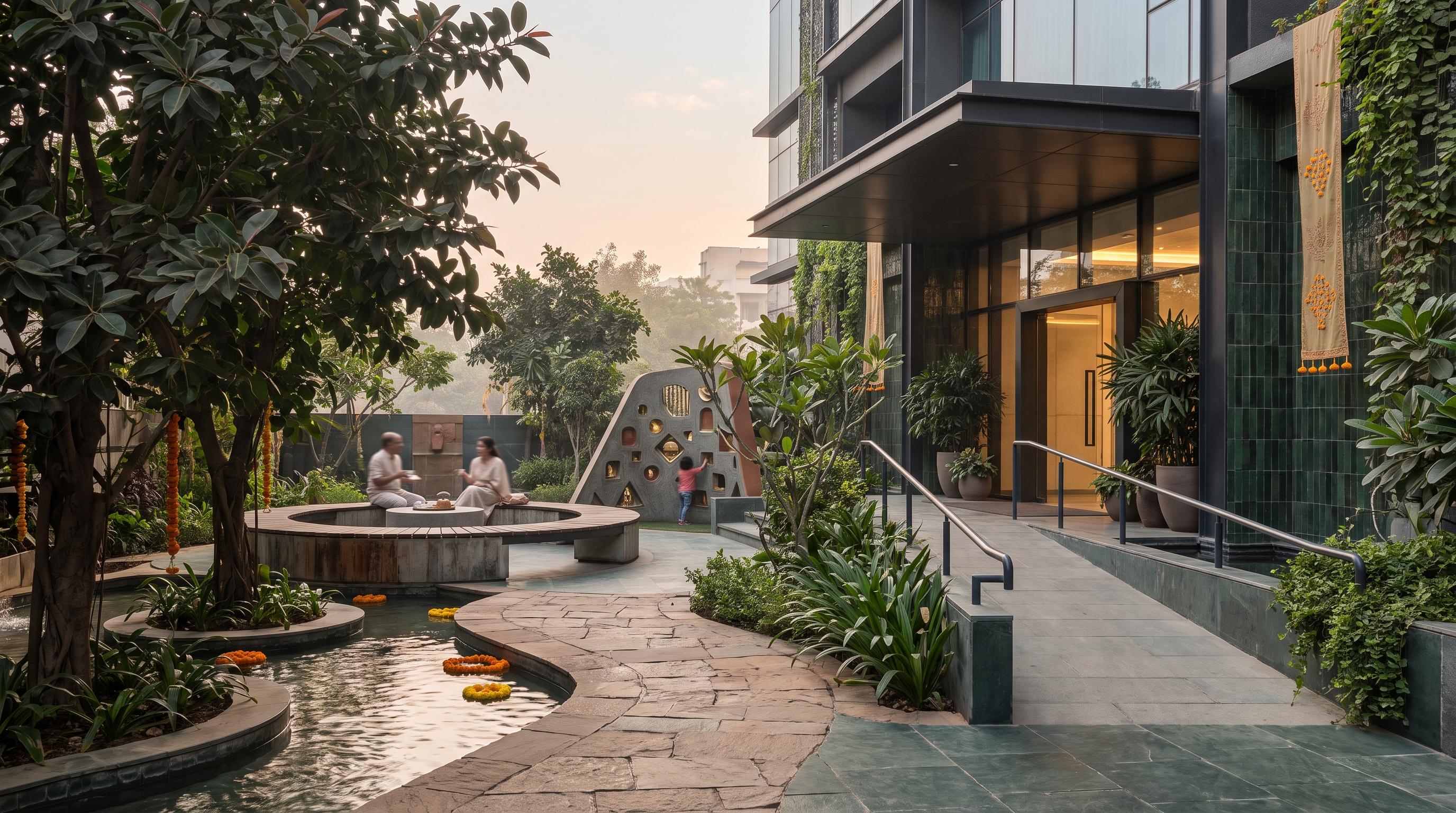
An accessible senior living garden with clear paths and sheltered seating

Safety

Confidence changes how a place is used.

Safety includes physical protection, clear orientation, visibility, appropriate scale, emotional comfort, and the confidence to participate. When people feel secure, they explore more and stay longer.

From observation to action.

The framework is not a score for display. It is a way to find priorities, align teams, and move better decisions into the project.

01

Observe

We document movement, pauses, interactions, sensory conditions, and points of friction.

02

Interpret

The five pillars reveal where the environment supports or weakens emotional wellbeing.

03

Prioritize

Findings become clear design priorities tied to the project stage and business goals.

04

Apply

Recommendations guide planning, amenities, materials, sales spaces, operations, and future decisions.

Explore the physical design methodology

See what the framework finds in your project.

Start with the place, the people, and the decisions your team is facing now.