Aug 4, 2026 · 6 min read
Why Quietness Is a Premium Feature in Homes, Hotels, and Offices
Quiet spaces do more than reduce noise. In homes, hotels, and workplaces, they increase comfort, improve use, and make premium design feel genuinely valuable.
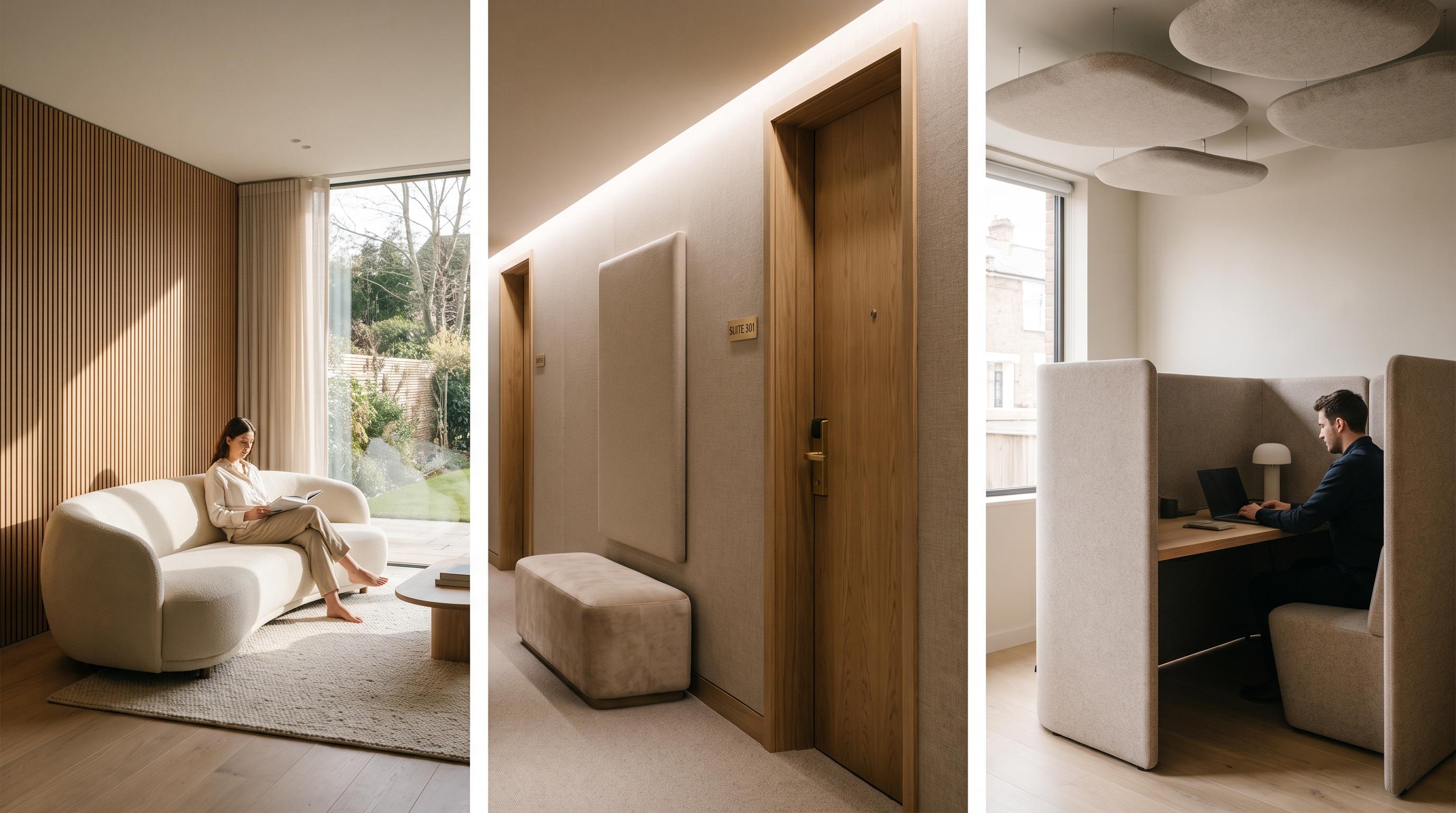
Quietness feels premium because it protects comfort, focus, and recovery.
Quietness is a premium feature because it makes a space feel calmer, more private, and more supportive of real life. In homes, hotels, and offices, people notice noise faster than most design teams expect. They may admire finishes, scale, or styling first, but they judge the space by whether they can sleep, think, talk, work, and recover without strain.
That is why quietness raises perceived value. It closes the gap between visual promise and lived experience. When a space controls noise well, it feels more considered, more usable, and more trustworthy. When it does not, even expensive materials can feel thinner than intended.
TL;DR: Quietness feels premium because it reduces stress and protects the moments people value most: rest, conversation, concentration, and privacy. Across residential, hospitality, and workplace projects, better acoustic comfort makes design feel more thoughtful in daily use, not just in photographs.
Why quietness feels premium
Quietness feels premium because it gives people control over attention and recovery. In a loud world, spaces that reduce auditory friction feel rarer and more valuable. They do not just sound better; they help the body settle faster and the mind work with less effort.
At home, quiet supports rest, privacy, and emotional relief.
In hotels, quiet supports sleep, decompression, and a stronger sense of care.
In offices, quiet supports focus, speech privacy, and lower fatigue.
World Green Building Council guidance treats acoustic comfort as one of the core conditions of wellbeing in buildings alongside thermal, visual, and other comfort factors. That matters because it places noise in the middle of lived experience rather than at the edge of design.
Why quietness matters in homes
In homes, quietness helps a space feel liveable rather than merely attractive. Buyers may talk about views, materials, or layout, but day-to-day satisfaction often depends on whether they can sleep, read, host, work, and recover without constant sonic friction.
That matters even more in premium residential projects, where people expect emotional relief as well as visual appeal. A beautifully finished apartment beside a noisy corridor, a reverberant clubhouse lounge, or a bedroom with weak separation from active zones rarely feels as valuable as the brochure suggests.
Separate active and restful zones so private rooms stay protected.
Improve door, wall, and glazing performance where privacy matters most.
Use softer finishes and furnishings to reduce harsh reverberation.
Plan amenities with retreat in mind so clubhouses and lounges support both social energy and calm.
Reduce disturbance near bedrooms and private spaces through better arrival and circulation planning.
When teams review these choices through the Happy Space Framework, quietness stops looking like a technical fix and starts looking like a design decision that shapes dignity, ease, and perceived quality.
Why quietness matters in hotels
In hotels, quietness directly affects whether a stay feels restorative. Guests may remember the lobby styling or the room view, but they judge the stay heavily by sleep quality, privacy, and the ability to decompress.
J.D. Power's 2025 hotel guest satisfaction study reported that when guests experience problems such as excessive noise, overall satisfaction drops sharply. That makes quietness one of the clearest practical signals of care in hospitality: it improves the stay itself while also strengthening the property's premium position.
Arrival spaces should feel calming, not acoustically chaotic.
Guest rooms should protect sleep and privacy, especially from corridor, lift, traffic, and mechanical noise.
Restaurants and lounges should support conversation, not force guests to speak over the room.
Spa areas, quiet corners, and semi-private seating should feel intentionally protected, not leftover.
Quietness also strengthens emotional memory. It helps a property feel composed, not simply decorated, which is one reason it belongs beside arrival, comfort, and atmosphere in any hospitality review.
Why quietness matters in offices
In offices, quietness helps people do demanding work without unnecessary friction. Open workplaces can support energy and visibility, but they fail when every task happens in the same acoustic condition.
Gensler's 2024 Global Workplace Survey reinforces that people still move between multiple work modes, including focused individual work and collaboration. Steelcase research on office noise likewise shows how distraction and lack of acoustic control weaken the workplace experience. The pattern is clear: people do not reject offices because they dislike collaboration; they reject offices that make focus too hard.
Open areas can support exchange and visibility, but they should not dominate every task.
Focus rooms should support concentration and sensitive conversations.
Acoustically calmer lounges should support informal work without full isolation.
Meeting rooms should reduce spill and fatigue by improving speech privacy.
For a wider workplace lens, see Places, where movement, comfort, and acoustic control work together rather than in isolation.
What quietness signals to users
Quietness signals that a space was designed around human experience, not only visual impression. People often read acoustic comfort as evidence of deeper quality even when they never describe it in technical terms.
It signals privacy.
It signals care.
It signals control.
It signals safety and ease.
It signals that the designer understood real use, not just presentation.
That is why quietness lifts perceived value across sectors. It makes homes feel more liveable, hotels feel more restorative, and offices feel more supportive of actual performance.
How quietness fits the Happy Space Framework
Quietness cuts across all five Happy Spaces pillars, which is why it is more strategic than a narrow acoustic fix.
Nature's Pampering
Quietness supports restoration when it works with daylight, air, and softer sensory conditions.
Belongingness
Quietness supports belonging when people can talk comfortably and use shared spaces without feeling exposed or overwhelmed.
Reward
Quietness can feel luxurious because it offers relief, pride, and emotional uplift.
Barriers
Noise is a classic barrier because it increases fatigue, weakens concentration, and reduces privacy.
Safety
Quietness supports confidence when people can hear what matters, orient themselves, and avoid sensory overload.
Design moves that make quietness feel premium
Quietness feels premium when teams build it into spatial logic, not when they add it at the end. The strongest projects usually combine planning, material, and behavioural thinking.
Separate noisy and quiet functions deliberately.
Use lobbies, thresholds, and transition zones to buffer disturbance.
Layer hard and soft materials with intention, not styling alone.
Create a mix of social, semi-private, and retreat spaces.
Protect sleeping, reading, working, and waiting zones from spill.
Treat circulation, wayfinding, and furniture planning as acoustic decisions too.
These choices do not make a place feel dull. They make it feel composed.
The commercial value of acoustic comfort
Quietness has commercial value because it improves the parts of experience people remember in use. It reduces the gap between visual promise and daily reality.
For residential projects, that can mean stronger buyer confidence and deeper attachment to shared spaces. For hotels, it can mean better sleep, stronger guest satisfaction, and a more credible premium position. For offices, it can mean less frustration, better concentration, and a workplace people are more willing to use.
Across all three sectors, the principle stays the same: when teams ignore noise, quality feels thinner than intended. When they design acoustic comfort well, the whole project feels more substantial.
Key takeaways
Quietness feels premium because it protects comfort, privacy, focus, and recovery.
Homes, hotels, and offices all gain commercial value when noise control supports real use.
Acoustic comfort is not a finishing touch; it is part of the core experience.
Better quietness usually comes from coordinated design decisions, not one dramatic product choice.
The strongest premium spaces balance energy with calm, rather than chasing silence everywhere.
Planning a project where lived experience matters? Explore the Happy Space Framework, browse Places, or start a conversation with Happy Spaces to review how calm, comfort, and usability are shaping perceived value.
Frequently asked questions
Why does quietness feel premium in a space?
Quietness feels premium because it reduces stress while protecting privacy, comfort, and focus at the same time. People read that calm as evidence that the space was designed for real use rather than for visual impact alone.
Is quietness only important in luxury hotels?
No. Quietness matters anywhere people need to rest, recover, concentrate, or talk comfortably. Hotels make the connection obvious, but homes, offices, senior living settings, and shared amenities all benefit when acoustic comfort improves.
What makes a home or office feel acoustically better?
Usually a mix of zoning, buffering, material choices, and access to retreat spaces. Acoustic comfort rarely comes from one product alone; it comes from coordinated design decisions that reduce spill and friction across the whole environment.
When should a project team review acoustic comfort?
The best time is early, when adjacencies, circulation, transition spaces, and material strategy are still flexible. Early review makes quietness part of the design concept instead of an expensive correction later.