Aug 4, 2026 · 7 min read
Why Luxury Clubhouses Look Premium but Still Feel Underused
Many premium clubhouses impress on launch day but struggle in everyday life. Here’s why shared amenities get underused, and how developers can design for comfort, belonging, and repeat use.
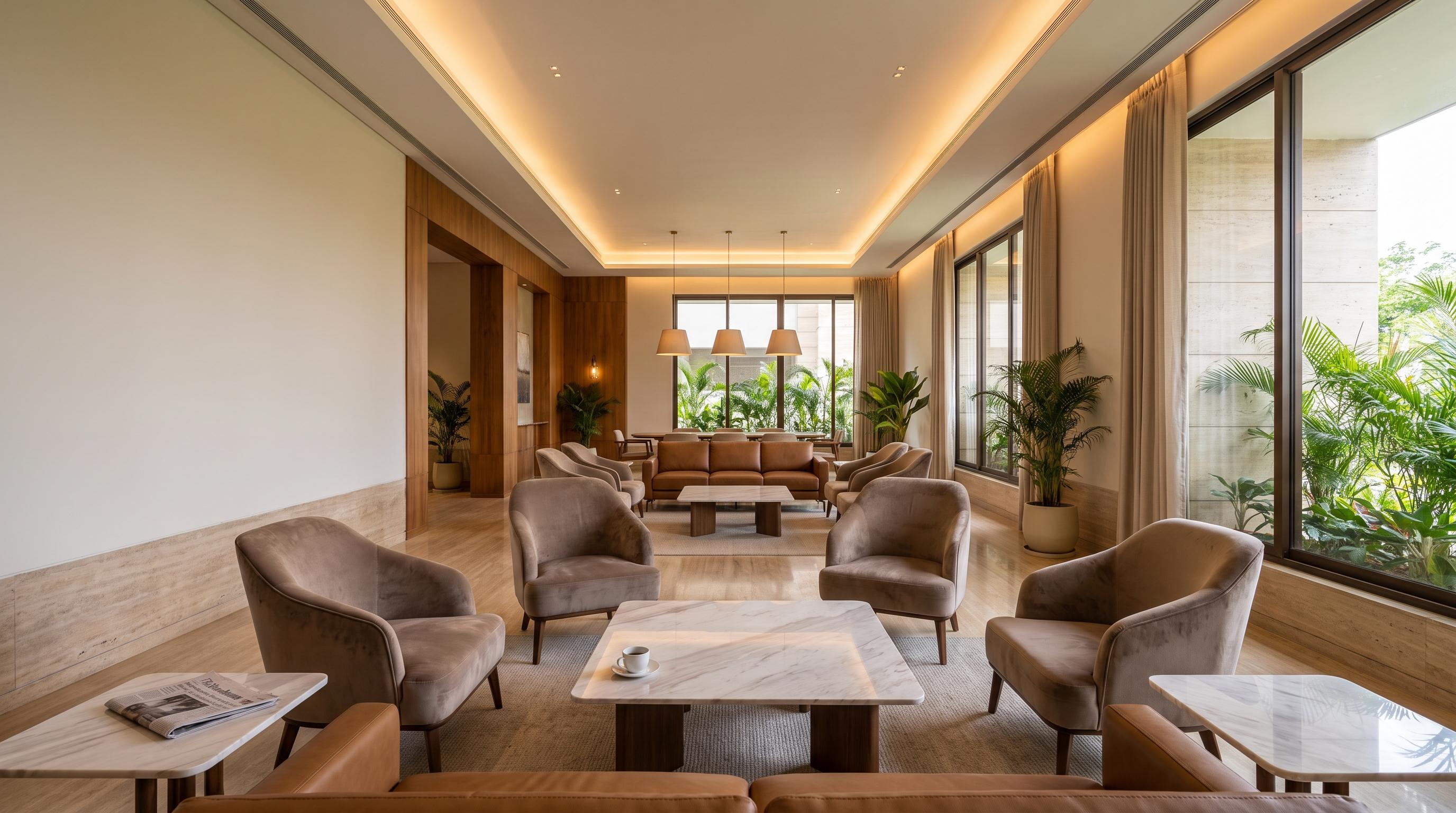
The brochure test is not the real test
A clubhouse succeeds when residents want to return to it on an ordinary Tuesday, not just admire it on possession day. That is where many premium residential projects lose value: the space looks polished in renders, sales tours, and launch photography, but it never becomes part of daily life.
Developers usually do not miss this because they lack ambition. They miss it because clubhouse design is often judged too early by visual finish and too late by actual behaviour. By the time underuse becomes obvious, the project has already spent heavily on fit-outs, branding, and amenity storytelling.
The better question is simple: does this space make people want to linger, return, host, pause, and feel proud to bring someone into it? If the answer is weak, the problem is rarely only aesthetic. It is usually about comfort, belonging, emotional reward, friction, and safety.
In short: underused clubhouses are rarely a budget problem.
They are usually a lived-experience problem.
The fix is not adding more amenities. It is designing the right emotional and functional conditions for repeat use.
What “underused” actually looks like
An underused clubhouse does not have to be empty all day to be failing. It usually shows up in subtler ways first.
Residents visit once after handover, then stop returning.
Only one age group uses the space, while everyone else bypasses it.
The gym works, but the lounge, reading areas, or community corners stay lifeless.
Families prefer private gatherings at home instead of using shared spaces.
The clubhouse is active for festivals or events, but weak in everyday use.
People say the space is “nice” without saying they enjoy spending time there.
That distinction matters. A premium amenity earns its value when it becomes part of routine life, not when it only supports staged moments. If it photographs better than it functions, it is not fully working for the developer, the resident, or the long-term brand of the project.
Why premium clubhouses fail in daily life
Most underused clubhouses fail for a small set of recurring design reasons. In our experience, the gap usually begins before a resident has even settled into the space.
The arrival feels formal, not welcoming. If the entry sequence feels too ceremonial, too exposed, or too confusing, people do not relax into regular use. A clubhouse should feel easy to enter, not like a space that must be “used correctly.”
The layout looks elegant but does not support real behaviour. Beautiful furniture clusters can still fail if they do not suit conversation, family supervision, quiet pause, laptop use, or mixed-age occupancy. Residents return to spaces that support how they actually spend time.
Acoustic comfort is weak. When every conversation spills, every child’s sound travels, or hard surfaces create fatigue, people shorten their stay. Noise is one of the fastest ways to make a shared space feel stressful instead of premium.
The space lacks emotional range. Many clubhouses are designed only for social energy. Real life needs both buzz and retreat: a place to gather, a place to watch, a place to work quietly, a place to wait, and a place to decompress.
Comfort and safety cues are too subtle or missing. Harsh lighting, confusing circulation, poor visual supervision, slippery transitions, uncomfortable temperatures, or weak wayfinding all create low-grade friction. Residents may never name the problem, but they still avoid the space.
A 2025 paper on clubhouse design described the same tension clearly: shared amenities often become visually appealing yet underused when form and function drift apart. That diagnosis is exactly why clubhouse strategy needs to move beyond styling and into human behaviour.
The research points in the same direction
Comfort and emotional usability are not soft extras. They are central to whether people choose a shared space again.
World Green Building Council guidance highlights thermal, lighting, and acoustic comfort as core conditions for wellbeing in buildings. In simple terms, if a space is too hot, too glary, too noisy, or too rigid in how people can use it, design quality falls apart in lived experience.
Gensler’s 2025 workplace research points to a parallel pattern in another category: when people are given choice, they move toward spaces that feel more natural, more residential, more socially comfortable, and more connected to daylight, fresh air, quiet, and lounge-like use. Clubhouses are not offices, but the behavioural signal is useful. People repeatedly choose environments that reduce friction and increase emotional ease.
This is also why premium residential clubhouses should not be evaluated as generic amenity boxes. They are part hospitality space, part community space, part retreat space, and part brand signal. That mix demands a more human lens.
The five-pillar lens that changes design decisions
A better clubhouse brief starts by asking how the space performs across five human-centred conditions, not just how many functions it contains.
1. Nature’s Pampering
This pillar asks whether the clubhouse feels restorative. Daylight, greenery, outdoor connection, airflow, shaded spill-out zones, and softer natural materials all help the space feel less sealed and more alive.
2. Belongingness
This pillar asks whether different residents feel comfortable using the space. A good clubhouse should support families, older adults, children, guests, and individuals without making the environment feel socially narrow or intimidating.
3. Reward
This pillar asks whether the space gives people emotional uplift. Pride, delight, warm lighting, a memorable corner, a calming view, or a beautifully handled arrival moment can all turn a shared amenity into a genuine value marker.
4. Barriers
This pillar asks what creates friction. Poor acoustics, awkward circulation, exposed seating, glare, rigid furniture, unclear zoning, and temperature discomfort can quietly erode usage even when the design looks premium.
5. Safety
This pillar asks whether people feel confident, legible, and at ease. Safety is not only about codes. It is also about intuitive movement, visual clarity, supportive edges, comfortable lighting, and the feeling that the space can be used without stress.
When developers review a clubhouse through these five lenses, the conversation changes. The brief becomes less about “what else can we add?” and more about “why would someone keep coming back?”
Questions developers should ask before sign-off
A strong pre-handover review can prevent years of dead space. These are the questions worth asking before a clubhouse is considered finished.
Would a resident choose to spend 20 quiet minutes here without an event planned?
Can two very different groups use the space at the same time without disturbing each other?
Does the entry sequence reduce hesitation, or increase it?
Are there clear places for conversation, pause, waiting, solo use, and family use?
Do daylight, temperature, and acoustics still feel good at the times this space will actually be used?
Is there at least one memorable reason to return beyond the presence of equipment?
Would this clubhouse still feel valuable if the styling were simplified and only lived experience remained?
Planning a new residential project? Explore the Happy Space Framework to see how emotional experience translates into design decisions, or browse the design levers that shape happier shared spaces.
The commercial risk of getting it wrong
An underused clubhouse is not just a design miss. It is a commercial miss.
When a premium amenity underperforms, the developer loses more than activity in one room. The project loses part of its lived differentiation. Residents feel less attachment. Shared spaces contribute less to identity and word-of-mouth. Sales storytelling becomes stronger than real experience, which weakens long-term trust.
On the other hand, when a clubhouse works well, it quietly strengthens perceived value across the whole project. It helps the development feel warmer, more complete, more generous, and more thoughtfully designed. That is exactly the kind of differentiation luxury residential buyers remember.
The goal is not more amenities. It is better lived experience.
The best clubhouses are not the ones with the longest amenity list. They are the ones that feel easy to enter, comfortable to stay in, emotionally rewarding to return to, and flexible enough for real life.
That is why clubhouse design should be audited through behaviour, comfort, and emotional response before it is judged complete. If a space looks premium but does not support belonging, ease, and repeat use, it is leaving value on the table.
If you are designing or repositioning a premium clubhouse, the best time to evaluate it is before underuse becomes visible. Start a conversation with Happy Spaces to review the space through Nature’s Pampering, Belongingness, Reward, Barriers, and Safety.
Frequently asked questions
Why do luxury clubhouses get underused even when they look expensive?
Because visual finish and real usability are not the same thing. Many clubhouses are designed for impression first, but daily use depends on comfort, acoustics, belonging, intuitive layout, and emotional ease.
What makes a clubhouse feel more usable in daily life?
Spaces feel more usable when they support multiple behaviours without friction. That usually means better zoning, softer acoustics, welcoming arrival, flexible seating, outdoor connection, and a balance between social energy and quiet retreat.
Should developers add more amenities to increase usage?
Usually not as a first response. More functions do not solve low repeat use if the existing environment already feels awkward, noisy, exposed, or emotionally flat. A better first step is to audit why residents are not returning.
When should a clubhouse be reviewed for lived experience?
The strongest moment is before final sign-off, while layout, lighting, furniture logic, and comfort decisions can still be improved. It is far cheaper to fix behavioural friction early than to retrofit an underperforming space later.