Aug 4, 2026 · 7 min read
What Families Notice in the First Ten Minutes of a Senior Living Visit
Families form a powerful impression of a senior living community almost immediately. Here’s what they notice first, and how design shapes trust, dignity, comfort, and confidence from the moment they arrive.
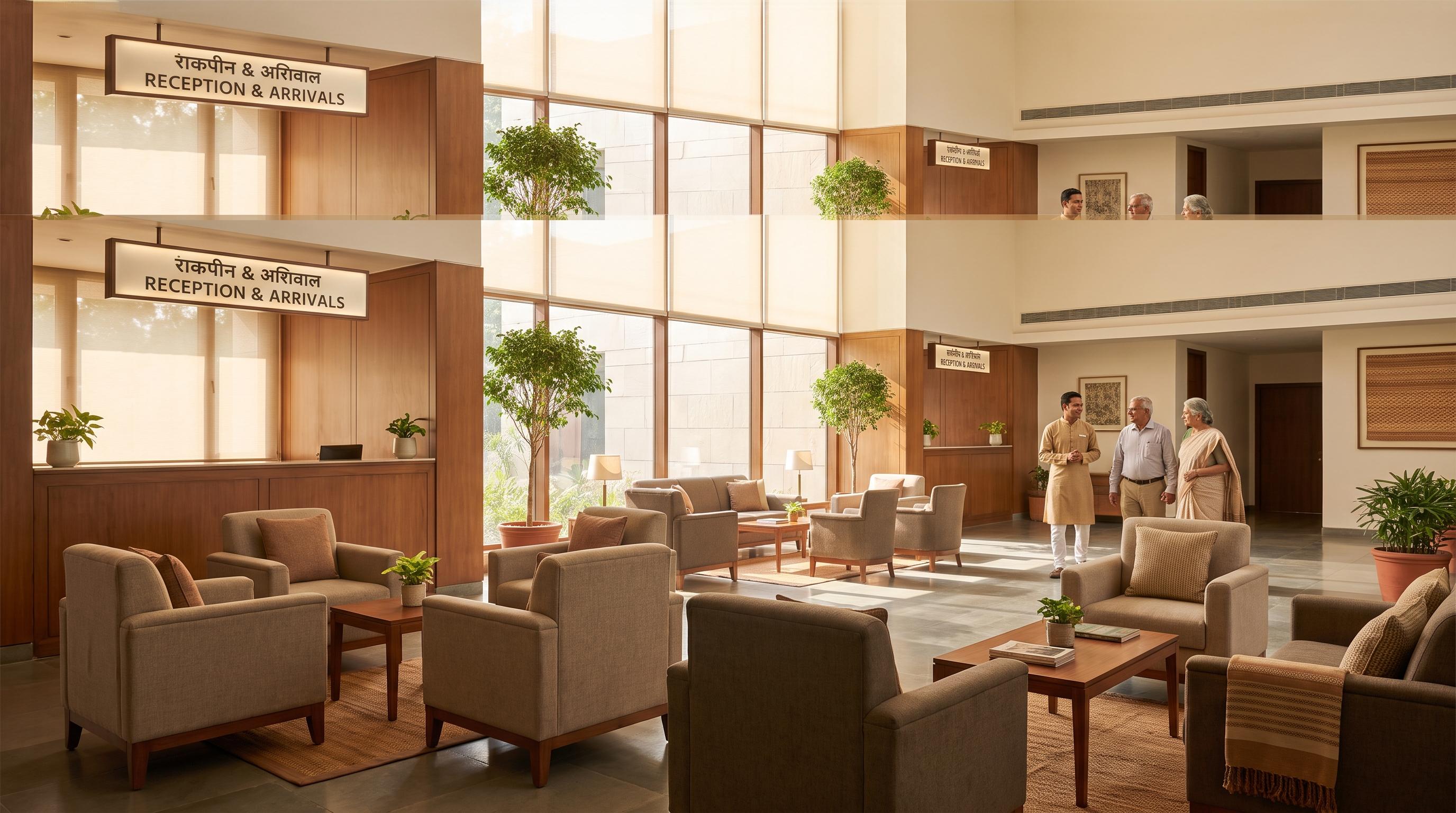
The first ten minutes decide whether a place feels trustworthy
Families begin judging a senior living community well before they ask about room sizes, medical support, or pricing. In the first ten minutes, they are usually asking a more immediate question: does this place feel dignified, calm, legible, and kind enough for someone they love?
That first impression is rarely formed by one dramatic feature. It is shaped by dozens of smaller signals: how easy the entrance is to read, whether staff acknowledge visitors warmly, whether the acoustics feel tiring, whether seating supports older bodies well, whether movement feels intuitive, and whether the overall atmosphere feels institutional or genuinely livable.
For senior living operators and developers, this matters because family confidence is often built emotionally before it is justified rationally. The visit may later involve careful questions about care, services, and operations, but the opening minutes set the tone for whether people feel reassured or unsettled.
In short: families do not only notice finishes or facilities.
They notice signals of dignity, ease, safety, and belonging.
If those signals are weak, trust becomes harder to earn later in the visit.
What families usually notice first
Families may not use design language during a visit, but their reactions are often tied to a consistent set of environmental cues.
The arrival sequence. The approach, entrance, reception, and first few transitions matter more than many operators realize. If arrival feels confusing, exposed, harsh, or overly clinical, people become guarded quickly. If it feels calm, welcomed, and easy to understand, confidence rises.
Whether the place feels lived in or managed. Families often sense the difference between a community that feels warm and inhabited and one that feels overly procedural. Materials, lighting, sound, social activity, and the visibility of everyday life all influence this reaction.
How older adults appear in the space. Visitors watch the residents. Do people look comfortable, oriented, socially at ease, and treated with dignity? Or do they look parked, passive, or disconnected from their surroundings? The environment plays a major role in that impression.
Ease of movement. Clear sightlines, supportive handrails, legible corridors, intuitive turns, and obvious destinations all reduce anxiety. When movement feels confusing, family members immediately begin imagining future dependence and distress.
Noise and sensory load. Sound travels fast in first impressions. A noisy television, clattering dining area, echoing corridor, or sharp reception zone can make a place feel stressful in seconds. The opposite is also true: acoustic calm reads as care.
The social atmosphere. Families notice whether there are places to sit together, pause privately, observe without being in the way, and have comfortable conversations. A good senior living environment supports both community and emotional breathing room.
Why these cues matter so much
Early impressions matter because senior living decisions are not judged like ordinary real estate decisions. Families are not only evaluating a building. They are evaluating whether daily life here will feel respectful, intelligible, and emotionally safe for someone they care about.
That is why design details that look secondary on a drawing can become primary during a visit. A warm chair with arms can matter more than a stylish feature wall. A corridor that is easy to read can matter more than an expensive finish. A gentle threshold between public and private zones can matter more than a dramatic reception desk.
The opening minutes also compress many concerns into one emotional reading: Will my parent feel lost here? Will they be treated kindly? Will they be able to move with confidence? Will visiting feel comfortable, or heavy? The environment answers these questions faster than brochures do.
The research supports what families respond to
Good first impressions in senior living are strongly tied to comfort, orientation, and supportive environmental cues rather than decorative styling alone.
The World Green Building Council’s guidance on occupant comfort highlights thermal, visual, and acoustic comfort as core building conditions that shape wellbeing. Those factors matter acutely in senior living, where stress, fatigue, glare, and noise can affect both older adults and visiting family members quickly.
The Center for Health Design’s aging-environment guidance also emphasizes quality lighting, noise reduction, simple wayfinding, appropriate furnishings, and carefully chosen finishes as practical design strategies that improve environments for older adults. Even though care settings vary, the message is clear: legibility and comfort are not cosmetic upgrades. They are part of how people feel supported.
The Alzheimer’s Association’s recommendations on supportive and therapeutic environments reinforce the importance of familiarity, orientation, and wayfinding-friendly settings for older adults. Families may not quote these principles during a visit, but they react to them instinctively when a space feels calm and understandable rather than disorienting.
The first-ten-minutes checklist
If a senior living team wants to know what families are really evaluating, these are the questions worth asking during a walkthrough.
Is the entrance easy to find, easy to enter, and easy to understand?
Does reception feel welcoming without feeling procedural or overbearing?
Are there clear visual cues for where to go next?
Do seating areas support older adults, family members, and staff conversations comfortably?
Does the lighting feel soft and legible rather than harsh or dim?
Do sound levels allow calm conversation?
Can a visitor imagine their parent moving here with confidence?
Are there visible signs of social life, dignity, and everyday warmth?
Does the environment feel like a community, not just a facility?
Planning a senior living environment or repositioning an existing one? Explore the Happy Space Framework to see how dignity, comfort, and confidence can be assessed across the five pillars, or browse the design elements that shape lived experience.
How the five pillars show up in a senior living visit
A senior living visit becomes much clearer when the opening experience is reviewed through Happy Spaces’ five-pillar lens.
1. Nature’s Pampering
Families notice whether the environment feels sealed and tiring or open, breathable, and restorative. Daylight, greenery, outdoor views, fresh-air feel, and softer natural materials all influence whether the place feels humane from the start.
2. Belongingness
Families notice whether people seem welcomed into the space. This includes the tone of arrival, the visibility of shared life, the comfort of family seating, and whether residents appear socially included rather than managed at a distance.
3. Reward
Families notice moments of emotional uplift: a calming garden view, a warm lounge, a beautifully handled threshold, a dignified dining space, a quiet corner for conversation. These moments create reassurance that the place can support more than basic function.
4. Barriers
Families notice friction quickly. Confusing circulation, echoing corridors, awkward waiting zones, uncomfortable chairs, visual clutter, and unclear signage all create low-grade stress that undermines trust.
5. Safety
Families notice whether the place feels stable, legible, and confidence-building. Supportive movement, good visibility, gentle transitions, safe flooring, and intuitive orientation all help the environment feel protective without feeling clinical.
What strong communities do differently
The best senior living environments do not rely on one grand gesture. They perform well across many small moments that reduce family anxiety and support resident dignity.
They make arrival intuitive. They provide seating that works for older bodies and multigenerational visits. They soften acoustics. They create a balance between community and privacy. They make corridors easier to read. They use materials and lighting that feel warm without becoming visually confusing. Most importantly, they help family members picture daily life going well here.
That last point matters. A successful first visit is not only about admiration. It is about trust. Families should be able to imagine ordinary days here feeling calm, supported, and respectful.
The commercial impact of those first impressions
When the first ten minutes go badly, the rest of the visit becomes a recovery exercise. Teams end up explaining away anxiety that the environment has already created.
When the first ten minutes go well, the opposite happens. Families become more open to the conversation, more receptive to the offering, and more willing to believe in the community’s care philosophy. The design does not replace operations, but it makes the operational story easier to trust.
For developers and operators, that means arrival experience, comfort, wayfinding, and social atmosphere are not side issues. They are part of the commercial and reputational performance of the senior living offer itself.
The goal is confidence, dignity, and ease
Families do not need a senior living community to feel flashy. They need it to feel calm, legible, kind, and deeply respectful of later life.
If the first ten minutes communicate confidence, dignity, and emotional ease, the rest of the visit has a much stronger foundation. If they communicate confusion, noise, or institutional coldness, trust drops before the real conversation begins.
If you are shaping a senior living project, the opening experience deserves deliberate design. Start a project with Happy Spaces to review how the first impression performs across Nature’s Pampering, Belongingness, Reward, Barriers, and Safety.
Frequently asked questions
Why do families form such strong opinions so quickly during a senior living visit?
Because they are reading the environment for signs of dignity, safety, comfort, and emotional ease. Those signals are often felt before they are verbalized, which is why first impressions carry so much weight in this category.
What matters more in first impressions: services or design?
Both matter, but design shapes how services are interpreted. A confusing, noisy, or overly clinical environment can make even a strong care offering feel less reassuring, while a calm and legible setting helps trust form more easily.
What are the biggest design mistakes in senior living visits?
Common issues include harsh lighting, echoing spaces, unclear wayfinding, uncomfortable seating, overly procedural arrival areas, and environments that feel managed rather than lived in. These details quickly affect family confidence.
Can an existing senior living community improve first impressions without a full rebuild?
Often, yes. Arrival sequences, signage clarity, acoustic comfort, furniture layout, lighting balance, waiting areas, and social visibility can all be improved without starting from scratch, especially when the changes are guided by how families and residents actually experience the space.