Aug 4, 2026 · 7 min read
How Hotel Spaces Become Emotionally Memorable
The most memorable hotels do more than look beautiful. They shape arrival, comfort, quietness, connection, and sensory detail in ways guests continue to feel long after check-out.
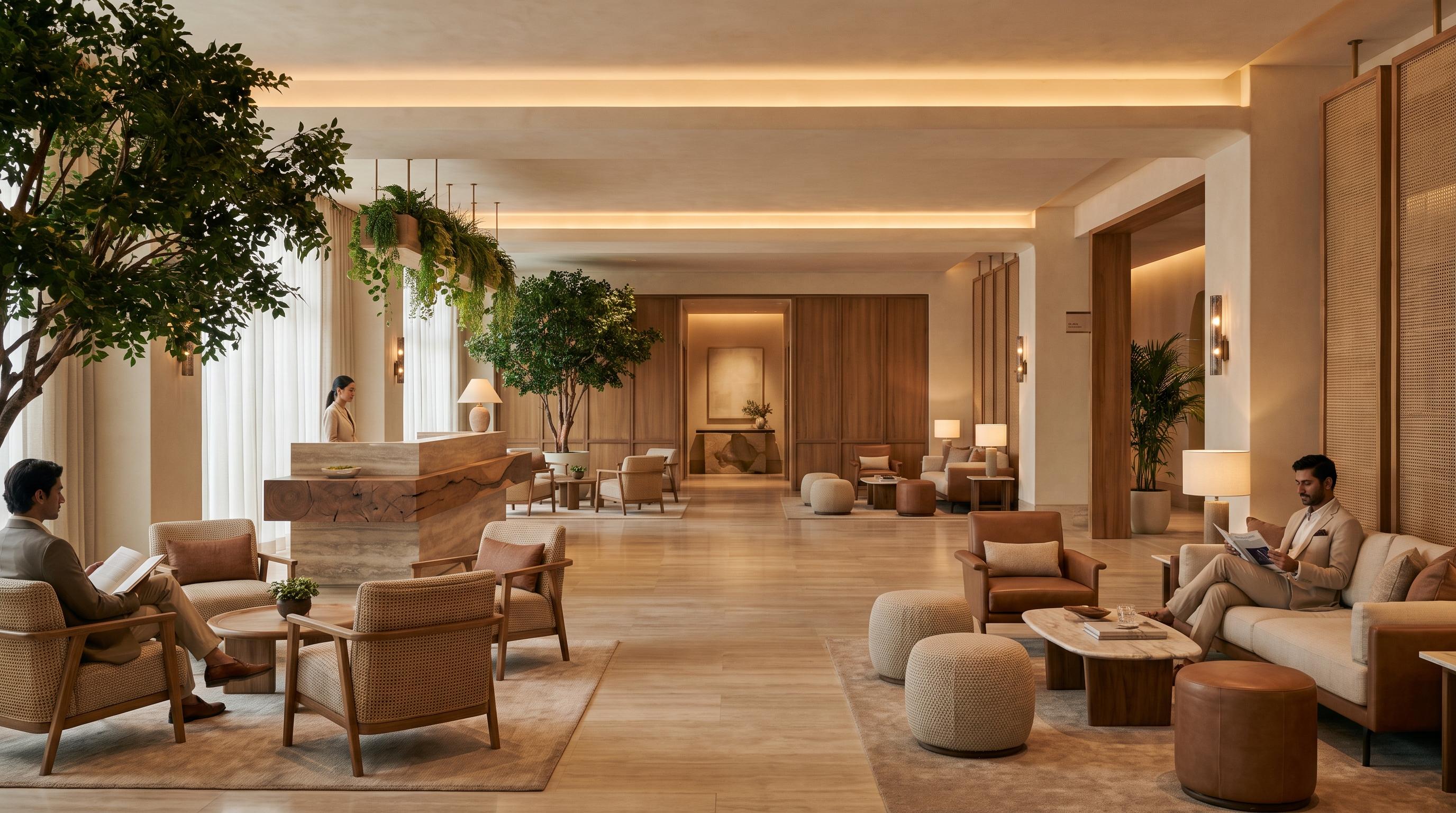
Hotel spaces become emotionally memorable when they make guests feel calm, cared for, and easy to orient inside
Hotel spaces become emotionally memorable when the experience feels coherent from the first minute to the last. Guests remember hotels that make arrival easy, comfort obvious, sound calmer, movement clearer, and the room worth returning to after a long day. They may book for location or price, but what stays with them is whether the place helped them settle, recover, and feel quietly looked after.
That is the real answer to the headline question: memorable hotels are not built around decoration first. They are built around low-friction arrival, real comfort, sensory calm, and a distinct sense of place. When those pieces work together, the hotel is not only attractive. It becomes recallable.
TL;DR: Hotels become emotionally memorable when they reduce friction and increase comfort at every stage of the stay. The strongest memories come from arrival, quietness, room usability, and a mood that feels specific to the property rather than generic luxury.
Why this matters commercially, not just emotionally
Memorability protects value. A guest may not use design vocabulary, but they quickly register whether a hotel feels stressful or restorative. That matters because service problems are expensive in perception terms. In J.D. Power's 2025 North America Hotel Guest Satisfaction study, only 12% of stays involved a problem, but when one did, satisfaction fell 217 points, from 677 to 460.
That does not mean every issue is spatial. It does mean the lived experience matters. If arrival feels awkward, corridor noise interrupts sleep, or the room looks polished but works poorly, the hotel loses emotional ground fast. In crowded hospitality categories, that is often the difference between a stay people enjoyed and a stay they actively remember.
The first memory starts at arrival
Arrival sets the emotional baseline. Guests begin reading the hotel before they reach reception. The driveway, threshold, lighting shift, pace of movement, and first sightlines tell them whether this place feels tense, warm, premium, confusing, or calm.
The best arrival sequences do three jobs well:
They reduce uncertainty. Guests can tell where to go and what happens next.
They create welcome without theatre. The space feels considered, not overperformed.
They establish mood early. Materials, light, sound, and proportion already feel like the brand promise.
If you want a deeper look at how first impressions shape space performance, see the Happy Space Framework.
Comfort is not background. It is the experience.
Guests feel comfort before they describe it. Guidance from the World Green Building Council and the WELL Building Standard treats thermal, acoustic, lighting, and ergonomic comfort as basic conditions of wellbeing. In hotels, those same conditions shape whether the stay feels restorative or draining.
A room can look expensive and still fail emotionally. Harsh glare, awkward temperature control, corridor noise, weak blackout conditions, and seating that looks elegant but feels tiring all make the guest work harder than they should. The result is simple: the stay becomes forgettable, or memorable for the wrong reason.
What comfort looks like in practice
Better sleep conditions: quiet, darkness, and simple controls.
Lower sensory effort: softer lighting, less glare, calmer transitions.
Usable furniture: seating, desks, and surfaces that support real use.
Clear room logic: guests should not have to learn the room by trial and error.
A hotel-noise survey by JCK Acoustics collected more than 9,000 responses across 100 hotels, and 58% of the sampled properties were 4- and 5-star. Even premium properties still needed acoustic performance close attention. That is a useful reminder: visual luxury does not automatically create felt comfort.
Quietness is one of the clearest premium signals
Quietness makes care feel real. Guests may notice the lobby styling first, but they judge the stay heavily by whether they can sleep, decompress, and hear themselves think. That is why acoustic relief is not a side issue in hospitality. It is part of the emotional product.
This is also where many generic articles stop at mood boards. The stronger angle is more practical: memorable hotels are not only sensory. They are operationally calm. They remove corridor spill, reduce echo in public areas, protect waiting zones, and create at least one place for retreat.
For a fuller look at this point, browse the design levers behind happier spaces.
Memorable hotels balance social energy with retreat
Guests do not want one emotional mode all day. A hotel that only offers spectacle can feel tiring. A hotel that only offers quiet can feel flat. The strongest properties give guests a choice between connection and retreat.
That usually means designing for different speeds
A lively zone for conversation and visible activity
A calmer zone for waiting, reading, or remote work
Outdoor or edge spaces that help guests decompress
Restaurants and lounges that feel warm without becoming acoustically hard
This range is what many generic search results miss. They talk about memorable experiences as branding or ambience. In practice, the better differentiator is emotional range built into the plan.
Nature and sensory calm deepen recall
Nature-linked calm helps a hotel feel less generic. Daylight, planting, airflow, shaded outdoor rooms, softer textures, and quieter sensory transitions make a property feel good to inhabit, not just good to photograph.
This does not require a resort setting. Urban hotels can still create stronger recall through filtered daylight, warm materials, greenery, window-side pause points, and calmer transitions between public and private zones. These moves reduce the transactional feel that makes many polished hotels blur together.
The room is where memory is secured or lost
The guest room decides whether the hotel delivered. Public spaces can create anticipation, but the room confirms whether the stay is actually restorative.
Guests remember rooms that combine ease with identity
Ease: simple controls, good sleep conditions, privacy, quiet, and surfaces in the right place
Identity: a memorable view, a reading corner, tactile materials, or a bathroom sequence that feels resolved
Many hotels invest heavily in finish and underinvest in usability. The more memorable room usually wins in small moments: where luggage lands, how lighting behaves at night, whether the desk is comfortable, and whether one distinctive feature gives the room a reason to stay in memory.
Designing for memory means removing friction, not just adding delight
Friction quietly weakens recall. Poor wayfinding, exposed waiting, confusing lift lobbies, weak privacy, reflective noise, and overcomplicated room controls all lower emotional quality even when the property photographs well.
That is where a stronger review lens helps. At Happy Spaces, hospitality environments are easier to assess when teams look across comfort, welcome, delight, friction, and trust rather than style alone. That shifts the discussion from “Does it look premium?” to “What is the guest actually feeling at arrival, in circulation, in the room, and in moments of pause?”
Three questions worth asking in review
Where does the guest hesitate?
Where does the guest recover?
What part of the stay will still be easy to describe a week later?
A practical checklist for more emotionally memorable hotel spaces
Use this as a fast audit. A hotel is more likely to stay in memory for the right reasons when most of these answers are yes.
Does arrival reduce uncertainty in the first minute?
Is the mood clear from entry to room?
Do lighting levels support both atmosphere and real use?
Can guests find quiet, privacy, and decompression without effort?
Do public areas support more than one kind of behaviour?
Are acoustics treated as part of luxury rather than an afterthought?
Does the room offer at least one personally memorable feature?
Do materials, views, planting, and airflow make the property feel specific rather than generic?
Key takeaways
Memorable hotels answer a felt question, not a visual one: does this place help me settle, recover, and want to return?
Arrival, quietness, and room usability shape memory more reliably than decoration alone.
The strongest hotels create emotional range by balancing social energy with retreat.
Reducing friction is as important as adding delight if the goal is stronger recall and differentiation.
Memorability is a business advantage
Guests remember how a hotel made life feel. When a property gets arrival, comfort, quietness, and spatial ease right, it becomes easier to recommend, easier to prefer, and harder to confuse with the next polished option.
If you are reviewing a hotel, repositioning one, or shaping a new hospitality project, start with the guest’s emotional journey rather than the styling package. Start a conversation with Happy Spaces to assess how arrival, comfort, quietness, and guest flow are shaping the experience.
Frequently asked questions
What makes a hotel emotionally memorable?
A hotel becomes emotionally memorable when the experience feels coherent from arrival to departure. The strongest memories usually come from clear arrival, real comfort, acoustic relief, a sense of place, and a room that feels easy to use.
Why do some beautiful hotels still feel forgettable?
Because visual polish and lived experience are not the same. If the property feels noisy, overlit, awkward to navigate, or thin on comfort, guests may admire it briefly without forming a lasting emotional connection.
Can small design changes improve guest memory of a hotel?
Yes. Better lighting scenes, quieter corridors, stronger wayfinding, improved seating, and calmer arrival cues can all change how a property is remembered without requiring a full redesign.
Why is quietness such a strong part of hotel memory?
Because quietness affects sleep, privacy, recovery, and the sense that the hotel genuinely cares for the guest. In practice, it is one of the clearest signs that comfort has been designed rather than assumed.